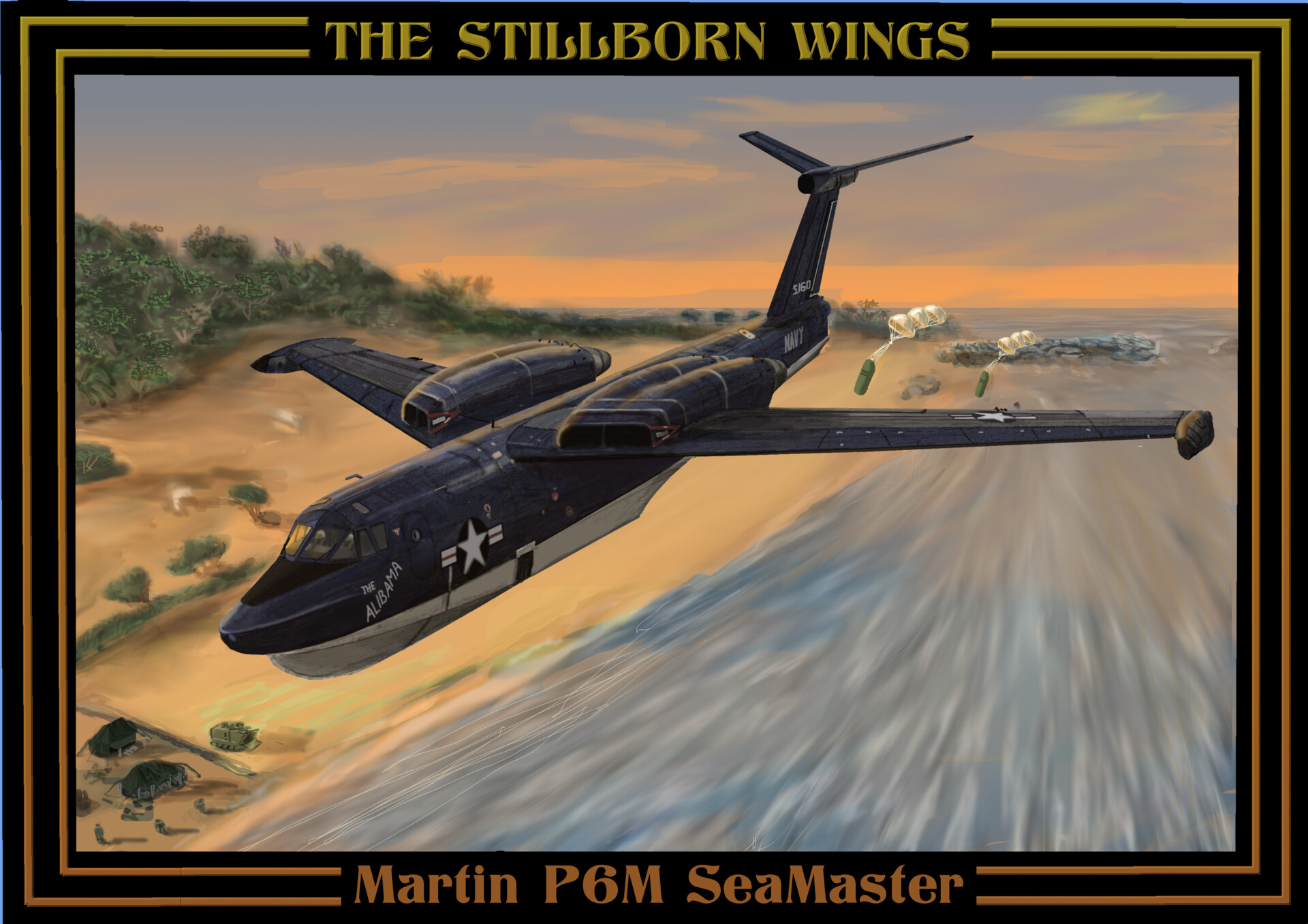
SW - Martin P6M SeaMaster
In the immediate postwar defense climate, the United States Air Force's Strategic Air Command was the linchpin of the United States' security as the sole means of delivery of the nation's nuclear arsenal. The Navy saw its strategic role being eclipsed by the Air Force and knew both its prestige and budgets were at stake. The Navy, in 1951, chose to create a "Seaplane Striking Force", useful for both nuclear and conventional warfare, including reconnaissance and minelaying. Both Convair and Martin submitted proposals, and the Martin proposal was chosen as more promising. An order for two prototypes was issued which was projected to lead to six pre-production aircraft and a projected twenty-four production aircraft.
The first flight came on 14 July 1955,but early tests showed that the engines were mounted too close to the fuselage and scorched it when afterburners were used. Flight testing was initially successful, but, on 7 December 1955, a control system fault destroyed the first prototype with the loss of all aboard. Eleven months later, on 9 November 1956, the second prototype, was also destroyed, due to a change made in the horizontal stabilizer control system.
The Navy and Martin felt that a new version, would provide a useful aircraft. The first was rolled out in early 1959. Changes included new, more powerful engines, an aerial refueling probe, improved avionics, and a canopy with better visibility. A buddy refueling drogue kit had also been developed to fit in the bomb bay. Three had been built by summer 1959 and Navy crews were moving them through operational conversion when the program was abruptly canceled in August of that year. In the age of balistic missile submarines, the manned bomber had become an expensive and unreliable nuclear weapon delivery system. Martin tried unsuccessfully to market the technology in the civilian market, with a version called the SeaMistress but there were no takers, and the company soon abandoned the aircraft business entirely to focus on missiles and electronics.